8f2 Worksheets
Functions
2 Compare properties of two functions each represented in a different way (algebraically, graphically, numerically in tables, or by verbal descriptions). For example, given a linear function represented by a table of values and a linear function represented by an algebraic expression, determine which function has the greater rate of change.
8f2
8f2
Compare the rate of change of a function shown as a graph versus one shown as a table Determine which function has the greater rate of change Find the slope from a graph by reading the rise and run between plotted points
8f2
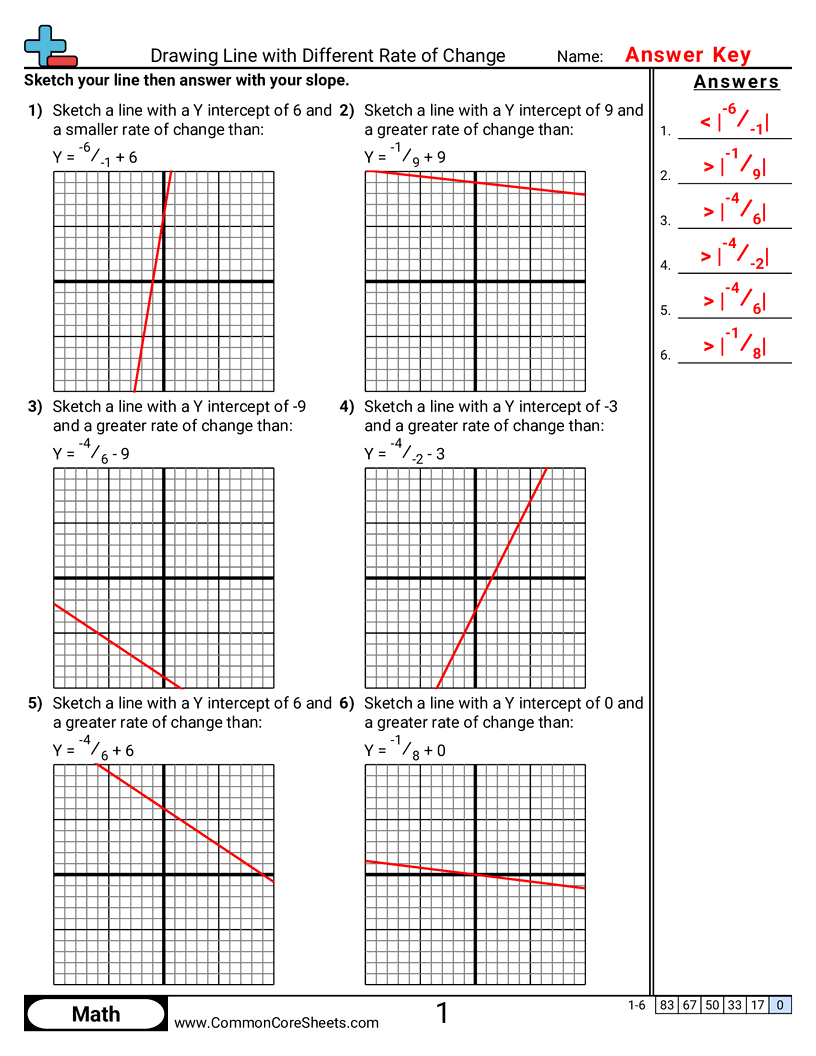
Draw a straight line on a graph when you are given its rate of change (slope). Use rise and run to plot points and keep the line going in the correct direction. Tell whether a line has a positive or negative slope by how it moves left to right.
8f2
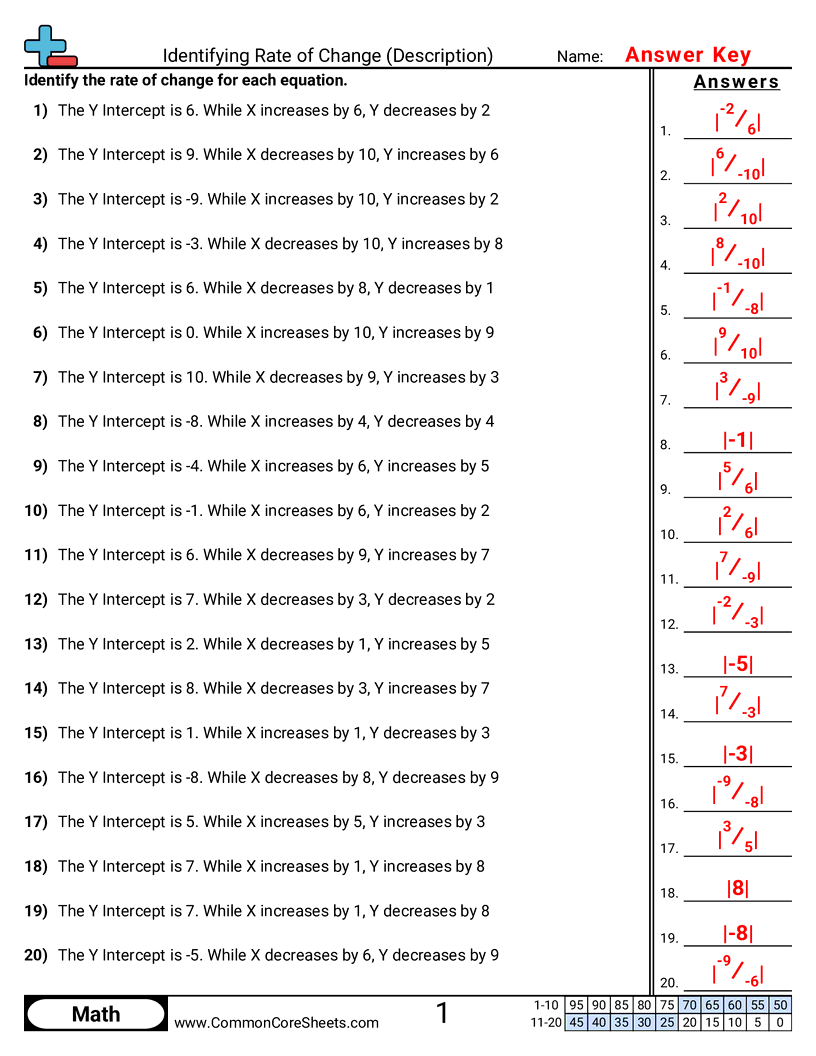
Practice finding the rate of change (slope) from a description of how x and y increase or decrease together Write the slope as a fraction using the change in y over the change in x Determine the correct sign (positive or negative) based on whether x and y are increasing or decreasing
8f2
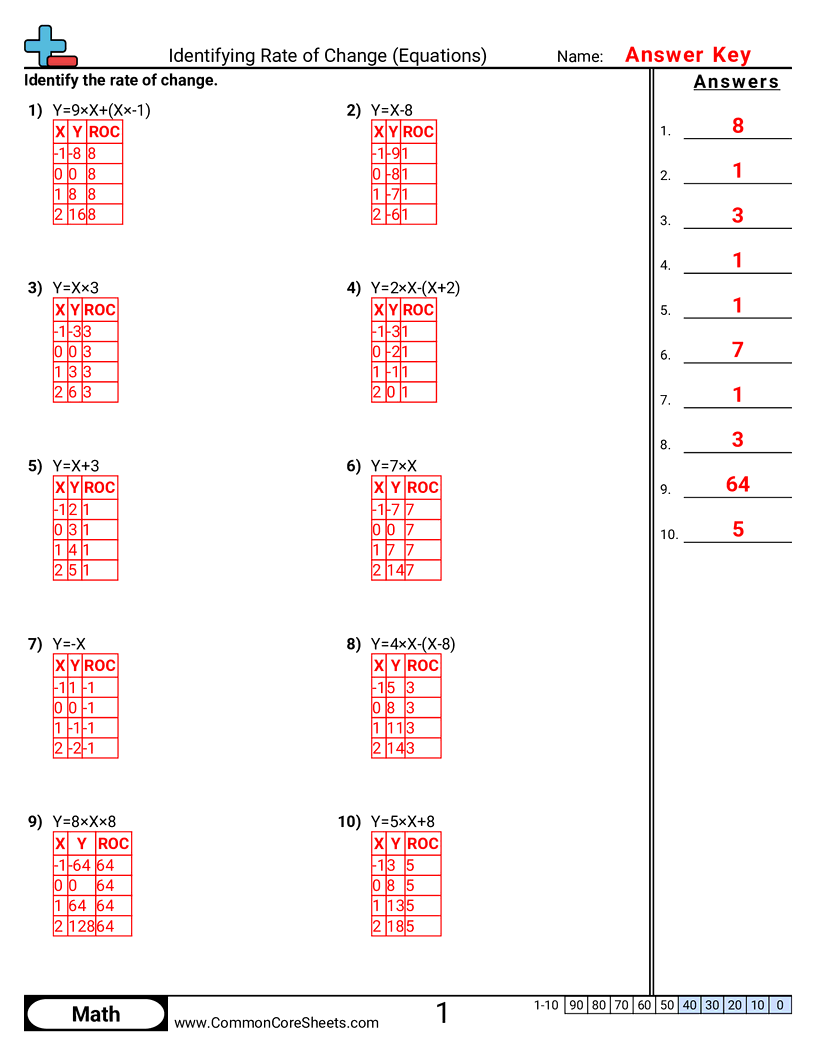
Practice finding the rate of change by plugging x values into an equation and seeing how y changes each time Fill in a table of x and y values, then calculate the difference between consecutive y values to find the rate of change Work with equations written in different forms and simplify them to spot a constant rate of change
8f2
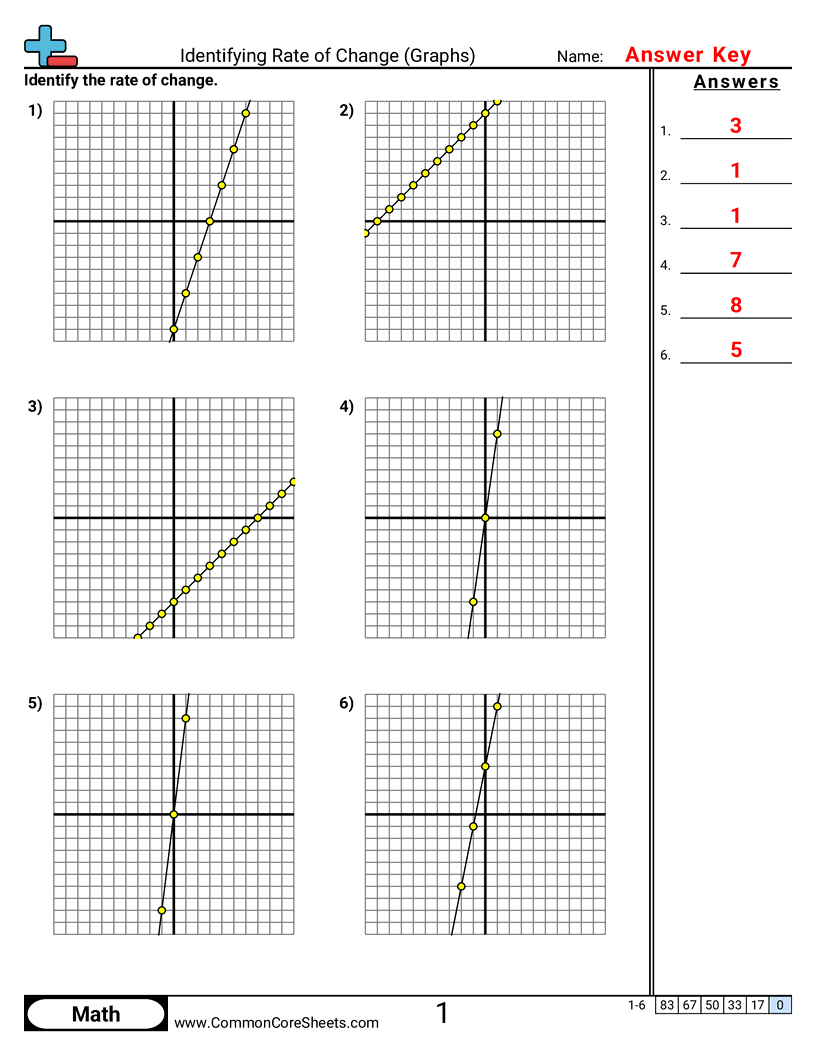
Read points from a graph and use them to find how much y changes when x changes. Find the rate of change by counting the rise and run between two points on a line. Tell whether a line shows a positive, negative, or zero rate of change.
8f2
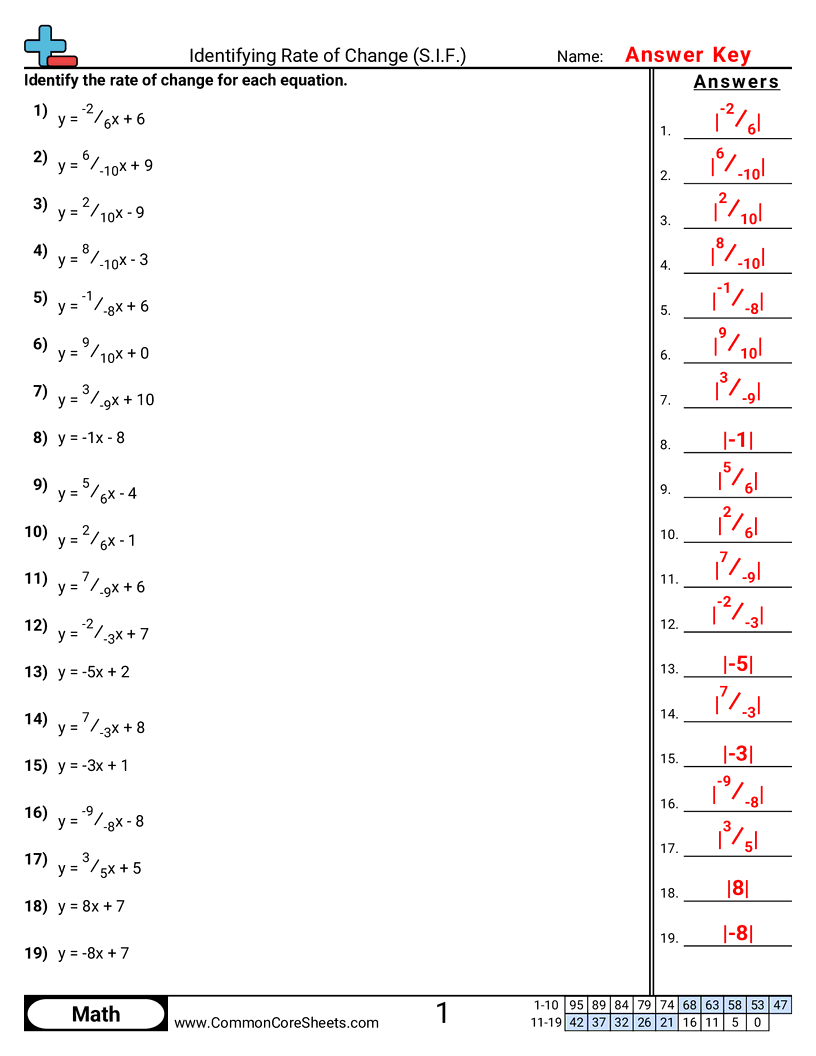
Find the rate of change (slope) from a linear equation written as y = mx + b. Tell whether the rate of change is positive, negative, zero, or not a whole number by looking at the slope. Identify the y-intercept in slope-intercept form and explain what it means as a starting value. Compare two equations by deciding which one changes faster based on their slopes.
8f2
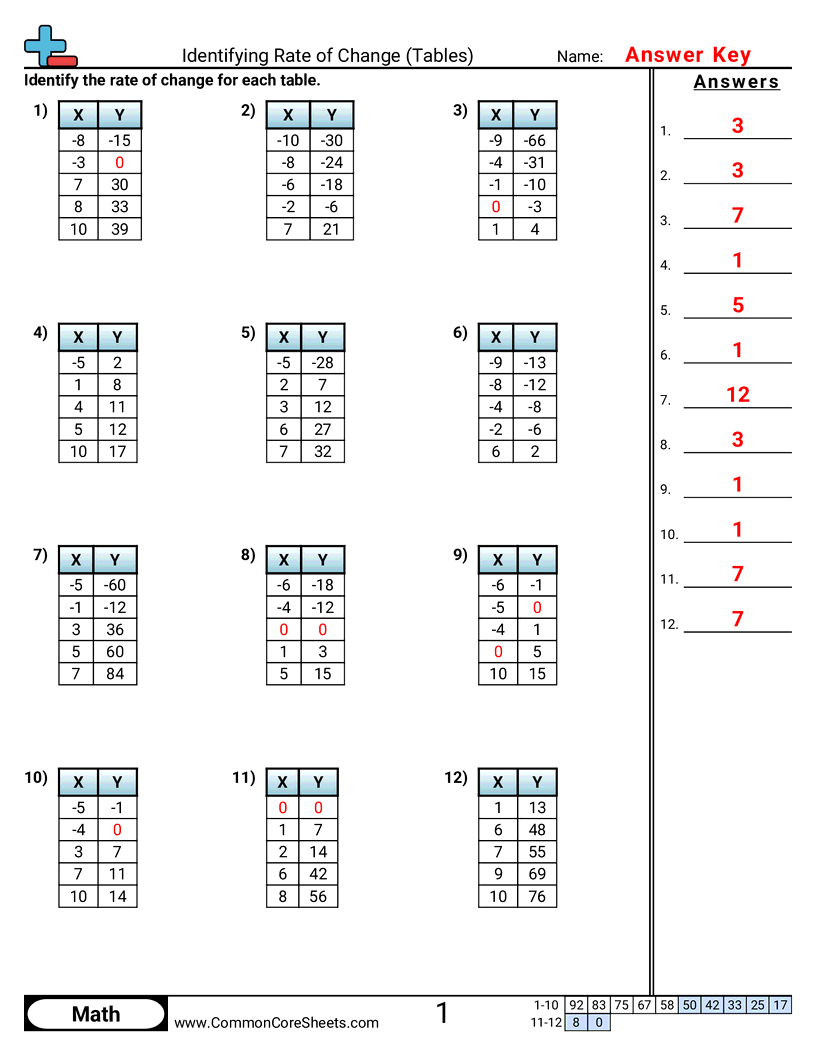
Practice finding the rate of change from a table by calculating how much y changes for each unit change in x Use the formula (change in y) ÷ (change in x) between pairs of values in the table Work with tables that include negative numbers and values that aren't evenly spaced
8f2
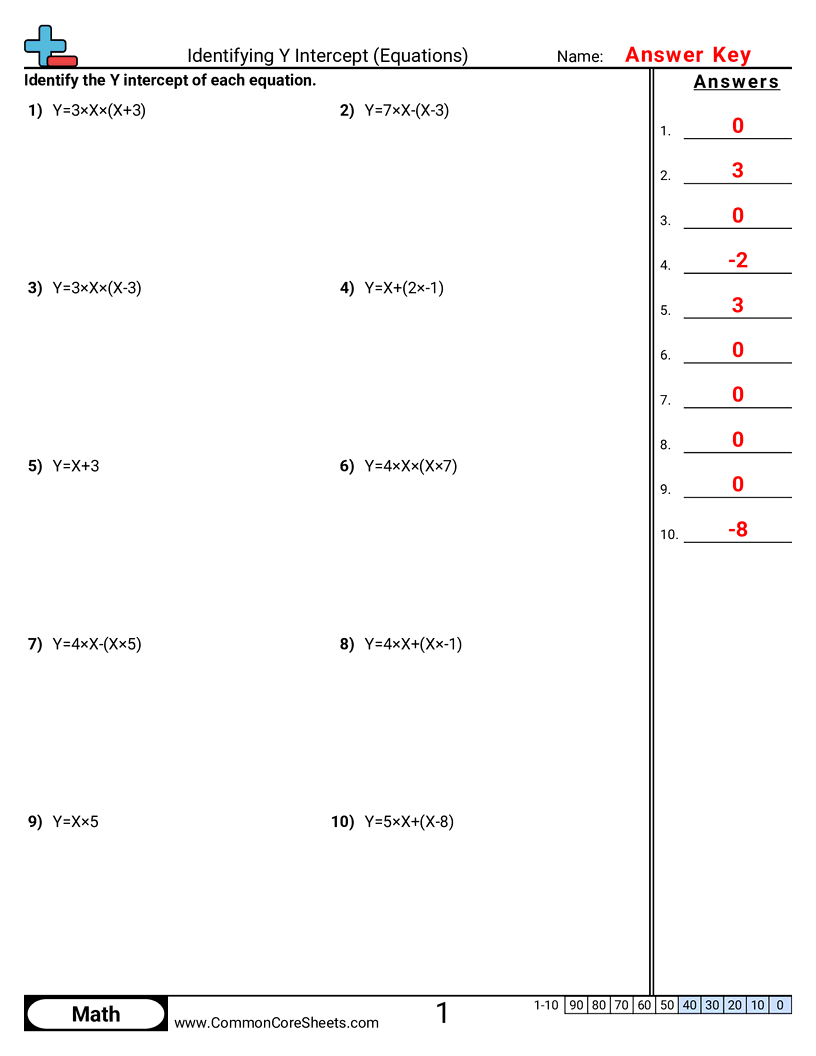
Find the y-intercept from an equation by spotting the constant term. Read the y-intercept directly from slope-intercept form (y = mx + b). Rewrite an equation into y = mx + b form so the y-intercept is easy to see.
8f2
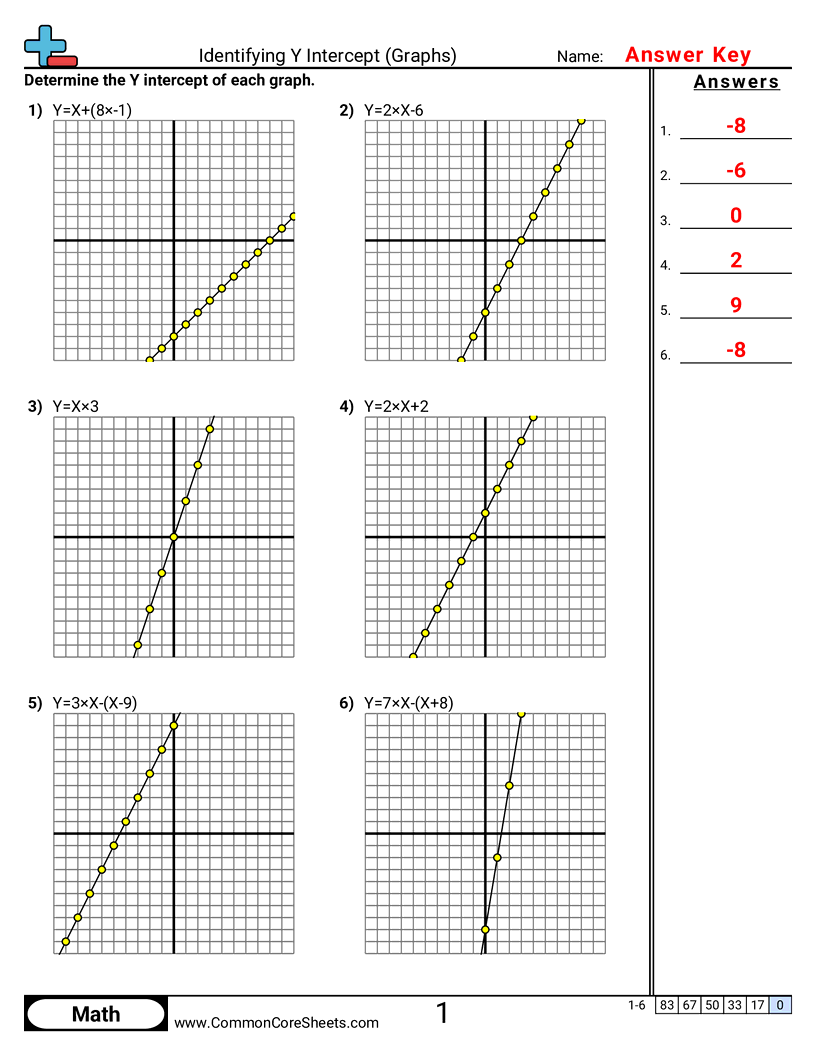
Find the y-intercept on a graph by locating where the line crosses the y-axis. Read the y-value at x = 0 and write it as an ordered pair (0, y). Use the graph’s scale and tick marks to get the correct y-intercept value, including negatives. Tell the difference between the y-intercept and other points where the line crosses the x-axis.
8f2
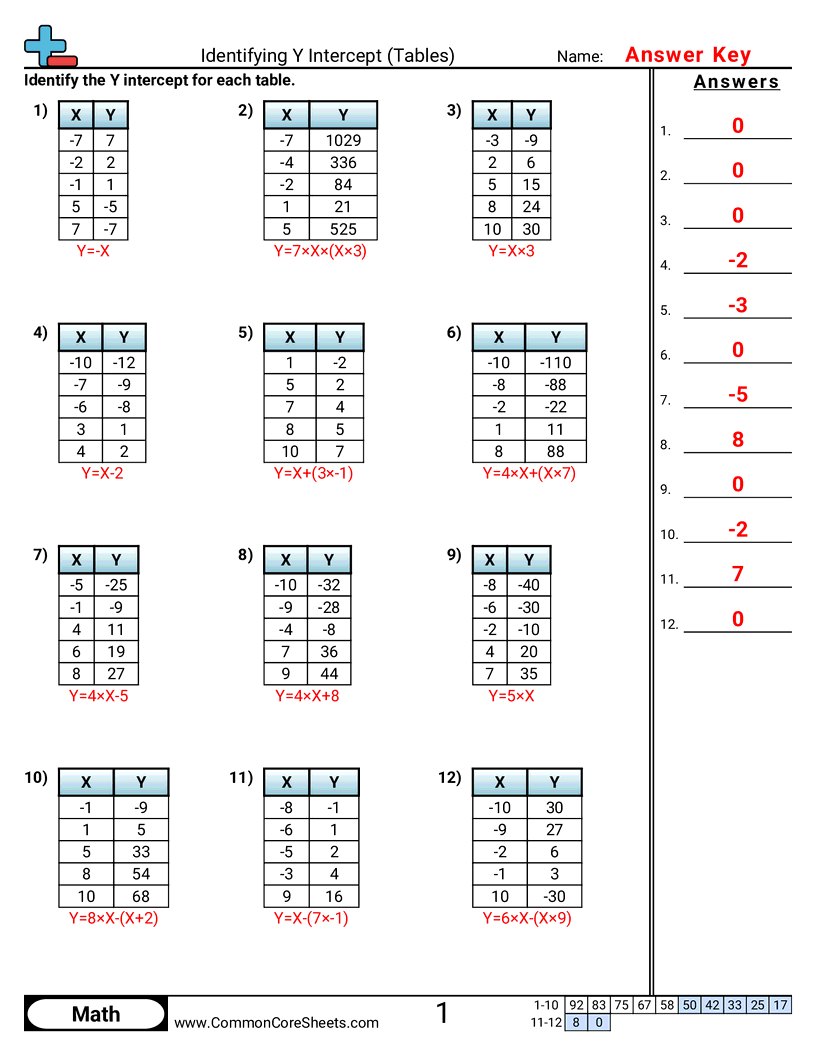
Practice finding the y-intercept from a table by determining the value of y when x equals 0 Use the given equation to calculate y at x = 0 when that row isn't directly in the table Work with different types of equations including simple, multi-step, and those involving multiplication and subtraction
Playwire Advertisement